
There are many reasons why your elderly parent or relative might find food and mealtimes less of a pleasure with age, such as declining mobility or fading taste buds, the effect of medication, and the absence of a spouse or partner.
Cooking and eating solo may become the norm, and it’s hard to navigate for many. Taking our inspiration from those who enjoy cooking and eating solo, as well as our meal delivery partners Parsley Box, this guide offers practical tips for shopping, cooking and eating solo.
1. Advantages of cooking and dining solo
There are some advantages of cooking and dining solo! There’s less washing up; the opportunity to cook and eat what you want and when you want it; the ability to follow a particular dietary regime; and the chance to combine eating with watching a favourite TV programme or listen to an audio book. Dining solo may well take time to adjust to, but hopefully a joy of food will prevail. Here are some practical tips to help:
- Encourage regular mealtimes: it can be easy to ignore regular mealtimes and snack or graze throughout the day instead. Try to create a daily routine that includes mealtimes, as not only will they give structure to the day, but they also offer the chance to eat properly, as well as opportunities to socialise with friends and family.
- Plan ahead: rather than take each day as it comes, encourage a bit of meal planning over a week. Not only will this save money but, again, it will add some structure to a week – particularly if you are getting to grips with living alone.
- Mix it up: Avoid monotony by varying meals and options. Rotate between cooking old favourites, ordering meal kits and trying new recipes. Eating with friends or family on different days, particularly when going out for lunch or afternoon tea, can also make mealtimes more exciting and something to look forward to.
- Little and often: if the prospect of sitting down to a proper meal is of no interest, then encourage an ethos of ‘little and often’ – smaller plates of favourite foods and healthy snacks.
- On a tray or at a table: it really doesn’t matter where someone prefers to eat. Whether it’s with a tray in the garden shed; in front of a favourite tv programme or the news; or at the table with napkins, candles, and the best crockery; food is as much about pleasure as anything.
2. The ready meal revolution
The ready meal has revolutionised the kitchen and mealtimes, particularly for those who aren’t able to get to the shops or don’t like to cook from scratch. For those dining solo, ready meals provide delicious options in the right portion size.

Companies such as Parsley Box have done all the thinking; creating a wide and ever-expanding range of main meal options, side dishes, puddings – they’ve even gone so far as to think about single serve drinks, including wine.
Ready meals are also ideal for entertaining friends and family. It takes all the stress out of planning the menu, shopping and preparing the food, laying the table, serving the food and drink, and playing host.
Single portion ready meals are also available from supermarkets, or there are meal kit delivery options too. That being said: with a full store cupboard, it can seem a waste of money to buy small amounts of herbs and spices for single meals.
3. Cooking for one
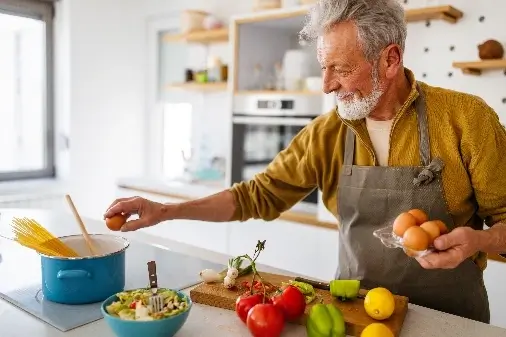
If cooking for one is a new experience, it may take time to adjust to. It can feel like a waste of time to be starting from scratch every day, and the temptation to snack only when hungry may be strong. But hopefully with time and encouragement, this will be a pleasurable experience.
If you are just starting to cook and eat alone, here are a few practical suggestions to help with what can be a difficult transition:
-
Experiment gradually
Start by making small changes to old routines. Try one new recipe or use one new delivery service each week. Small steps can build confidence over time.
-
Celebrate small wins
Whether it’s successfully preparing a new dish or enjoying a pleasant virtual meal with a friend, there’s always an excuse to celebrate food.
-
Seek out local resources
Look for local classes or groups that offer cooking or dining opportunities. Many organisations – lunch clubs, church groups, and local charities – are dedicated to helping older adults navigate these changes.
-
Batch cooking and freezing
Prepare larger portions of favourite recipes and freeze individual servings. This means you only need to cook once and can enjoy a home-cooked meal several times throughout the week.
-
Simple recipes for solo cooking
Choose recipes that are quick and easy, such as one-pot meals, casseroles, and stir-fries. Websites and cookbooks specifically designed for single servings can offer inspiration and step-by-step guidance.
-
The right equipment
A microwave, slow cooker, pressure cooker, or air fryer can make cooking more straightforward and less time-consuming. These appliances often require minimal preparation and can produce delicious meals with little hands-on time.
-
Portion control
Using smaller cookware and plates can help manage portions and avoid food waste.
4. Using technology to share dining experiences
Eating alone doesn’t mean you have to dine in complete isolation. Modern technology offers several ways to connect with others, even when you’re physically apart:
- Virtual dining companions: encourage your parents or relatives to eat in virtual company with friends or family. Platforms like Zoom, Skype, or FaceTime provide easy tech to connect over food.
- Online cooking classes: this is a great way to learn new recipes and techniques from the comfort of your own kitchen. These classes are not only educational, but provide an opportunity to meet others who share an interest in cooking.
Technology also in the form of audio books, podcasts, favourite music, or just the radio or TV, are excellent meal companions too – they never ask for seconds, although the washing up will still be a solo job!
Final thoughts
Cooking and eating solo doesn’t have to be an unhappy prospect. It can be an opportunity to celebrate and remember, from recreating an old favourite menu to using a beloved recipe that continues to be followed decades on. Whether starting from scratch with ingredients or having a ready meal delivered to the front door, there really is joy in food and eating solo.
You are what you eat: guide to a healthy diet for older people | It can be a struggle to know which foods are healthy for older people, not to mention managing the costs of rising food prices. This easy guide to a healthy diet helps assuage these concerns.