




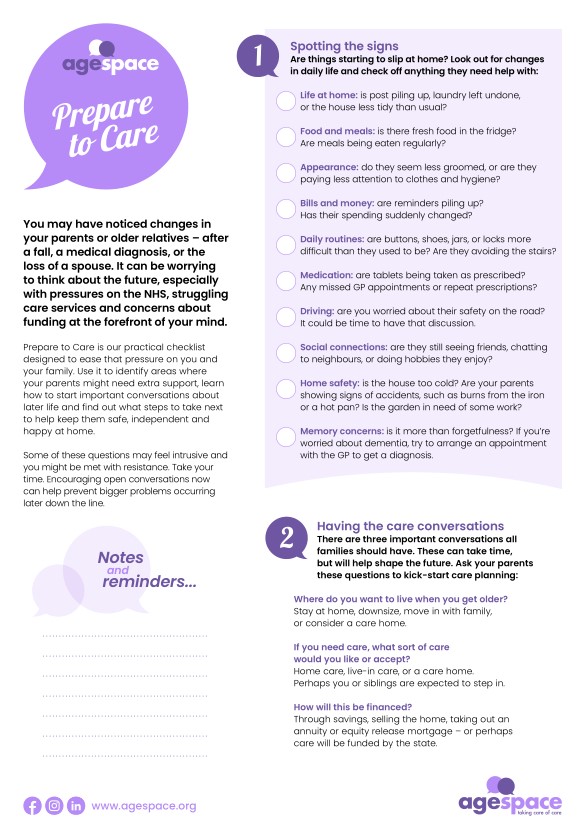
Prepare to Care
Everything you need to get started with elderly care
Start your plan today
Prepare to Care is our comprehensive guide to help you with elderly care. You may have noticed a worrying decline in the health of your parent or relative, or perhaps you want to help them remain independent and safe at home. Prepare to Care will guide you through every stage of planning.
Are things starting to slip at home? Look out for changes in daily life and check off anything they need help with:
is post piling up, laundry left undone, or the house less tidy than usual?
is there fresh food in the fridge? Are meals being eaten regularly?
do they seem less groomed, or are they paying less attention to clothes and hygiene?
are reminders piling up? Has their spending suddenly changed?
are tablets being taken as prescribed? Any missed GP appointments or repeat prescriptions?
are buttons, shoes, jars, or locks more difficult than they used to be? Are they avoiding the stairs?
are you worried about their safety on the road? It could be time to have that discussion.
are they still seeing friends, chatting to neighbours, or doing hobbies they enjoy?
is the house too cold? Are your parents showing signs of accidents, such as burns from the iron or a hot pan? Is the garden in need of some work?
is it more than forgetfulness? If you’re worried about dementia, try to arrange an appointment with the GP to get a diagnosis.
1. How to talk about care
Talking about ageing, care and finances can be difficult. Learn how to start conversations that make planning for later life easier.
Spot when your parents might need extra support and help them stay safe, independent and happy at home.
If you can answer these simple questions, you will feel prepared when it comes to making big decisions.
Most families aren’t prepared for later life - and that can make a hard moment even harder.
Download our handy checklist to take the first steps today
- Free Checklist
- Exclusive extra content via email!
For someone to download / redirected to the Prepare to Care checklist and receive the email journey
No Spam. Unsubscribe Anytime. View Privacy Policy
2. Where to begin at home
Do your parents need more help and if so how do you help them make the best decisions?
Ask yourself these simple questions to see if they need more support, and find out what to do next.
Expert advice to help you and your family nagivate this tricky time and help your relatives remain at home for longer.
Returning home can be a relief, but also a worry. Here's how to make sure you and your relatives are prepared.
3. Understanding key legal matters
Here are three key legal steps to take to help your parents manage their finances and wellbeing.
Find out everything you need to know to set up a power of attorney, including what happens if there isn't one.
Follow our easy how to guide to help you understand how simple and affordable writing a will can be.
Make sure you understand all of the key terms, to remove some of the confusion along the way of your care journey.
4. Finding more help at home
A priority may be enabling parents and relatives to remain living independently and safely at home, with affordable alterations and some fantastic tech.
We've tested the best on the market, so you can ensure safety without compromising dignity or independence.
Prevention is better than cure regarding a fall, the consequences of which can be devastating.
Being prepared ahead of a crisis can make a big difference. Our practical tips will help ease that pressure.
Most families aren’t prepared for later life - and that can make a hard moment even harder.
Download our handy checklist to take the first steps today
- Free Checklist
- Exclusive extra content via email!
For someone to download / redirected to the Prepare to Care checklist and receive the email journey
No Spam. Unsubscribe Anytime. View Privacy Policy

5. Understanding the care options
If your parents need care there are different options, and many considerations and decisions to be made.
Home care can range from companionship and shopping to nursing and dementia care - all in the comfort of home.
Live-in care is for for those who need round-the-clock care but want to stay in their own home. Find out if it's right for you.
If a care home is needed, you can browse the best care homes in your area, hand-picked for your needs.
6. Getting to grips with the finances
Funding care is complicated and expensive – and it’s important to get to grips with all the options.
The first step in accessing care is getting a care needs assessment from the local authority. Find out what you need to know.
If you know that you will be self-funding your care then follow our simple guide so you know where to start.
There is funding available for everyone regardless of means; from Attendance Allowance, to grants for alterations at home.
7. Care for the carer
Whether it’s you, a sibling or a parent, taking care of the carer is vital, as it’s exhausting and emotional and so easy to become completely overwhelmed.
Undertake a carer's assessment to be guided to what help you need and what help is accessible to you.
Whether it's an afternoon off or a proper holiday, taking time out is essential for anyone who is caring for someone else.
There are some instances where you may qualify to receive an allowance if you are caring for an elderly parent or relative.