



Home Elderly care Prepare to Care Care conversations

The 3 care conversations every family should have today

Two older ladies chatting in the garden

If you can answer these three simple questions, you will feel confident and prepared when it comes to making the big decisions later down the line.

Lyndsay Conway
Written by  Lyndsay Conway
Two older ladies chatting in the garden
Share
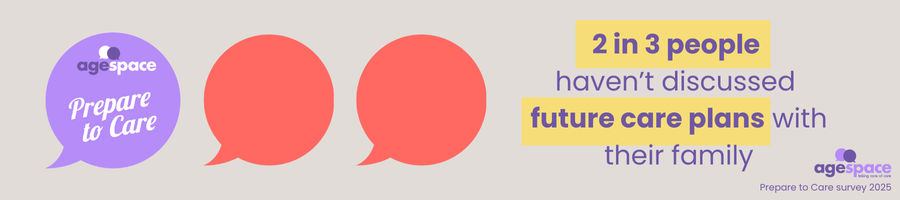
Infographic that reads: 2/3 of people haven't discussed care with their family

Having conversations about ageing, care and money is rarely easy. If you’re the adult child, these discussions are often accompanied by a growing sense of role reversal – children stepping into a position previously inhabited by the parents – and that can feel like an unwelcoming shift in dynamics. For parents, confronting the realities of ageing and potential dependence on others is something no one wants to have to do. So it’s understandable that these conversations are sometimes avoided altogether. But putting them off can make difficult situations even harder when there is a sudden decline in health, or a crisis hits.

So, approach the topic carefully, considerately and respectfully and these conversations don’t need to be as hard as you think.

Choosing the right moment to talk

Don’t feel like you need to cover everything in one go. In fact, it can be better if you don’t. Let the conversations grow over time, rather than trying to squeeze everything into one, quite intense, Sunday lunch.

You can also look for natural opportunities to bring these conversations up. Talking about serious topics on a gentle walk is often easier than when you are sitting down, face to face. After a GP appointment might be one of the times the topic comes up most organically. Or you can try talking about a crisis you’ve recently watched a friend go through. Remember: you’re not aiming to create a detailed plan immediately, you’re just creating an opening for future discussions.

To get started, here are the three questions to ask to help shape the future and provide a framework for you to have further conversations down the line.

1. Where would you like to live when you're old?

This simple opening question can lead on to all sorts of important discussions around care. Some people want to stay in their current home for as long as possible, with a few adaptations if needed. 

Teal front door surrounded by greenery
There are plenty of home monitoring tools, mobility aids and assistive tech products that can help people remain living independently at home for longer. Learning how to prevent falls, stay active and lead a healthy lifestyle are all topics to discuss to help put family member’s minds at ease as loved ones age, and particularly if an elderly parent is living alone. Others might be open to downsizing or moving closer to family. Even for those considering the idea, downsizing comes with a huge emotional impact and isn’t something to dismiss as an easy option. Luckily, there are companies that can help: the Senior Move Partnership is a valuable source of tailored help for downsizing, renting – or moving to a care home or retirement property.

Topics to discuss

  •  Staying at home: will it always be manageable? Are there stairs that might look more precarious as the years go on, or a big garden that might become difficult to maintain?
  • Moving house: is living nearer to family an option? Would a retirement village offer greater peace of mind for everyone?
  • What’s the ideal setting for later life: a bustling town centre or quiet countryside? Close to shops and restaurants, or somewhere with a slower pace of life? Keep in mind that while life in the countryside might look like a peaceful escape, village life can sometimes mean fewer care services, limited transport options and longer trips to the nearest hospital.

2. If you need care, what kind of care would you accept?

It’s not easy to envision a future where this sort of help is a necessity, but understanding what would be acceptable before it’s required means those wishes are easier to respect later down the line.

If the need for live-in care or a care home becomes a reality, it’s best to have researched these options together. This way, you can start to get a sense of what feels right – and what definitely doesn’t. For live-in care, it’s worth finding out how it works in practice, what the costs are and how a carer is matched to a household. For care homes, you might look at factors such as location, facilities, social activities and whether pets are welcome, if that’s a consideration.

Topics to discuss

  • Live-in care versus care homes: Would a carer who lives in the home, be more palatable. or does being somewhere with on-site support and a community of residents, staff and other people coming in and out feel more reassuring?
  • Home adaptations or moving house: would a few adaptations or the introduction of some tech solutions – from video doorbells to voice assisted help, such as Alexa – be enough to make the home safe in later life? Perhaps a retirement village or assisted living property would be the best solution.
  • Personal preferences: Are you looking for someone to help with daily tasks such as washing, dressing or personal care, or companionship and help with tasks around the home, such as laundry and shopping? Are there cultural, religious or dietary needs to consider? If there are pets in the home, these need to be factored into decisions too.

3. How will this be financed?

This is often the trickiest conversation of all, but also one of the most important. Care – whether domiciliary day care, 24/7 live-in care or in a care home – is expensive, and the costs vary hugely. 

Piggy bank illustration

Fees can also change over time as care needs increase, so what’s affordable now may not be in the future. Understanding all this early on helps you to plan as best you can. It also gives you time to explore all options, rather than trying to correctly fill in tricky financial forms in the middle of a crisis.

Topics to discuss

  • Personal savings: anyone with more than £23,250 in savings will be responsible for their own care, so you might want to think about how long any savings you do have might last.
  • Pensions: both state and private pensions may contribute towards ongoing care costs.
  • Property: selling or renting out a home can help pay for care, but there are practical (and emotional) considerations attached.

  • Benefits and allowances: make sure you’re clued up on things like Attendance Allowance and Pension Credit and research what help is available from your local council.
There are financial options available.  We urge you to take proper financial advice from an accredited adviser from The Society of Later Life Advisers (SOLLA).  Options may include equity release or immediate needs care annuities, for example. Read our guide about funding later life to see what options could be available to you.

Keeping these conversations going

It’s unlikely you will find all the answers straight away. But that’s fine, as these questions are just starting points to get things rolling. You might even want to bring in siblings, close friends or healthcare professionals later on.

Having these chats before a crisis hits means decisions can be made calmly and with the whole family involved. You’ll feel better prepared, stress will be reduced and guilt will be alleviated. But, most importantly, families can respect parents’ wishes while helping them stay in control of their future.

Make a note of what’s been said, follow up and make sure everything is written down in an advance care plan or living will.

It’s not an easy set of conversations, but it is one of the most caring, responsible things you can do.

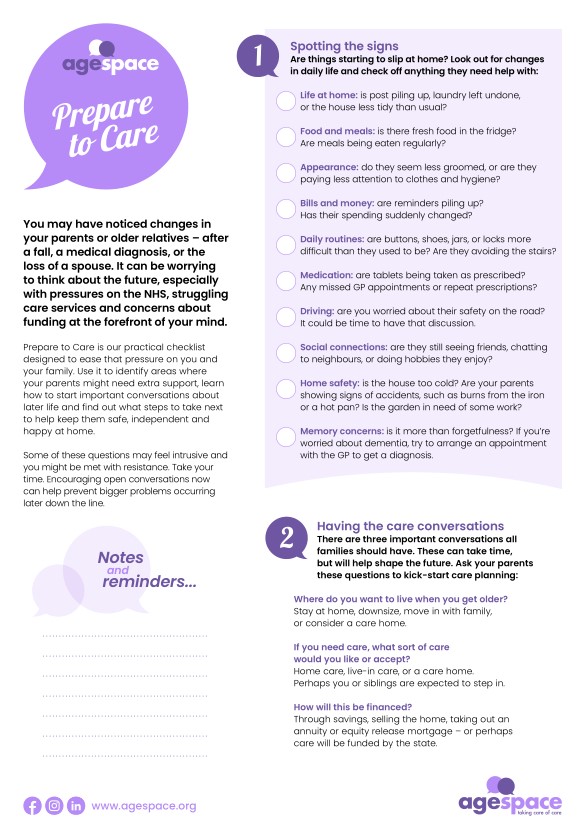
Prepare to Care document
Get started today

Most families aren’t prepared for later life - and that can make a hard moment even harder.
Download our handy checklist to take the first steps today

  • Free Checklist
  • Exclusive extra content via email

For someone to download / redirected to the Prepare to Care checklist and receive the email journey

Name(Required)

No Spam. Unsubscribe Anytime. View Privacy Policy

Meet our expert
Age Space Digital Editor Lyndsay Conway

Lyndsay is the Digital Editor of Age Space.

More by Lyndsay Conway