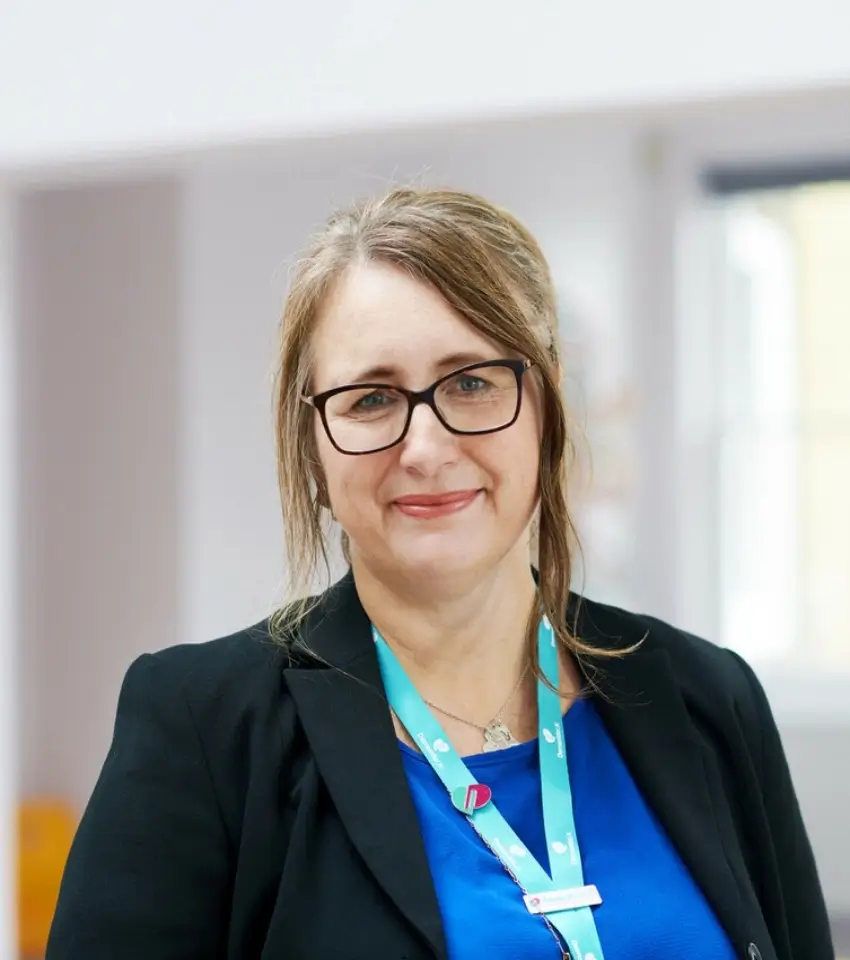

Vic Lyons dementia Admiral Nurse
Home Elderly care Care conversations

“This is a tough gig. It’s difficult.”

Vic Lyons dementia Admiral Nurse

In this candid conversation, Admiral Nurse Vic Lyons shares the evolving care conversations, daily challenges and unexpected positive outcomes of supporting her family across multiple generations.

Anne King
Written by  Anne King
Share

Vic Lyons is married to Andrew and they have two children, aged 15 and 12.

Vic and Andrew are joint full-time carers for Andrew’s mother, who lives close by and has dementia.

Andrew has his own business, and Vic has worked as a nurse in the dementia field for more than 20 years, stepping into an Admiral Nurse role in 2002 and becoming full-time two years later. She is currently leading Dementia UK’s clinical digital development, as well as leading the development of the charity’s dementia at work proposition.

You and Andrew must be the very definition of the “sandwich carer” generation. How does it feel being the filling in that sandwich?

100 percent! It’s like those club sandwiches you get with the three layers, because we work as well. We’re working, but we’re also looking after Andrew’s mum as well as our children.

So, it’s not just a basic egg mayo sandwich – we’ve got the chicken and the bacon as well!

In terms of having those “care conversations”, did this come about suddenly, or did you all have the chance to talk and plan?

We’ve always been a close family, so we’ve always helped out and done lots together.

There were changes, like Andrew’s mum had stopped cooking dinners, stopped taking her pills properly and stopped going to the supermarket independently. But because her diagnosis is dementia, it’s evolved over time and, obviously, she’s deteriorated.

If I were to try and pinpoint when we became carers, I can’t put a definite line in the sand because it has evolved over time. It just happened.

Andrew's mum moved from London to live very close to you. How have you talked about care for her and what she would like?

We had evolving conversations about care – what she wanted and what she needed. And in truth, I think one of the hard things is that she will fluctuate in what she wants, what she’ll say, what her needs are, because of her dementia.

Sometimes she’ll say: “I don’t want to be a burden on you,” and other times: “Well, why won’t you take me in? Why am I on my own?”

It’s really difficult to manage. And because of that, you just don’t know. You think: what would she want if she didn’t have dementia?

You must see this all the time at work, but does that make it any easier for you?

In a funny way it makes it harder, because I’m harder on myself when I get things wrong – and I do get things wrong.

I’ll sit there and think of the number of times I’ve said to somebody: “Prioritise your own health needs, have a break.”

In who's best interests are we acting now? How does that sit? How do we balance those needs? These are big decisions you're making.

If someone you care for is distressed, it’s not you, it’s trying to work out the root cause of why they’re distressed. And if they’re being aggressive, there’s some need they’re trying to communicate.

Whilst I’ve got a good tool kit, I sometimes don’t remember to use those tools or I forget that kit’s there.

But then, also it’s confusing navigating your way through the systems and the decisions: in who’s best interests are we acting now? How do we balance those needs? These are big decisions you’re making.

How do you deal with the family dynamic – the needs of two teenagers, for instance?

It’s not just me caring for Andrew’s mum – it’s very much me and him together, but it’s the first time I’ve been in this role. Whilst I might know about it professionally, it’s the first time I’ve experienced it within the family.

And the children? That’s the hardest thing. You end up feeling a constant guilt, truthfully. If I’m with the children or the children come home and they want to talk, but that’s at the same point as Andrew’s mum is becoming distressed or she needs us to do something for her, you’re torn.

You’ll sometimes be thinking, well, if I don’t deal with her distress now, it’s going to escalate and get worse and worse and worse. Whereas my son can wait for a bit. But then by the time I’ve finished dealing with her, I’m saying to the children “You’ve got to go to bed, you’ve got to brush your teeth, you’ve got to do your homework”… and so on.

The 3 care conversations to have today

Find out everything you need to know about the three simple questions you need to ask your relatives today, to make planning for the future so much easier

Is there, from what you know now, anything you would have done differently?

I think I’m fortunate because I knew where it could end. So, we’ve done the things like power of attorney and got all the bits of paper in place.

We’re going to build an extension on our house and move Andrew’s mum in. Probably, in truth, if I was going to do something differently, instead of moving his mum from London to a flat near us, I would have just done the extension straight away! But that’s hindsight.

What would you say personally to someone who's in your situation and struggling?

Oh, it’s really hard. I knew how hard it is for families because of my job, but it’s harder than I ever thought it would be.

I think the best advice to give someone would be to talk to people to get support. To reach out to the Admiral Nurse network, or to whatever support mechanisms are out there for you to learn about the condition. Not just dementia, but if there are other conditions, to learn about those as well. I think when you have knowledge of it, it helps you to be more patient. It helps you to understand what’s going on. 

I think by talking about this, we reduce some of that stigma as well and we kind of bring it out into the open and say: actually, this IS really hard. This is a tough gig. It is difficult.

Any positives to encourage other people in a similar position?

As hard as it is, one of the things that’s lovely is seeing how my children are now.

Obviously, we are bringing them up to be that way and that’s the way we want them to be. But I do think because they are helping look after their nan and they’re seeing the way we are with her, it’s probably giving them some really good life lessons

I just want to give that a little bit of hope. It is hard, but there is this little bit of light, watching them all laughing and being silly, and seeing the change in them and how caring they are. They’ll make great nurses one day if that’s the route they decide to go down!

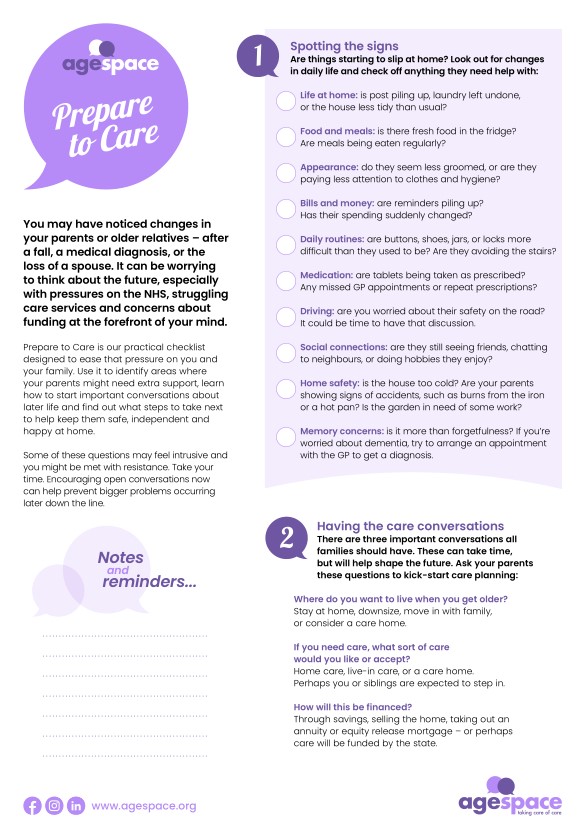
Prepare to Care document
Start your own conversations today

Most families aren’t prepared for later life - and that can make a hard moment even harder.
Download our handy checklist to take the first steps today

  • Free Checklist
  • Exclusive extra content via email!

For someone to download / redirected to the Prepare to Care checklist and receive the email journey

Name(Required)

No Spam. Unsubscribe Anytime. View Privacy Policy

Purple arrow
What to read next

Dementia care options | Finding the right care for a loved one can be difficult. In this guide we look at the options available, from those you might be able to access at home, to care homes with dementia services. 

Meet our expert
Anne King

Anne King is an editorial contributor for Age Space.

More by Anne King
Get our weekly newsletter PLUS a free dementia guide

Name(Required)
No Spam. Unsubscribe Anytime. View Privacy Policy
Join today!
Our free weekly email

Get expert advice, support & guides on care, dementia & more.

Paper plane
Weekly email
Join our Community

Get expert advice, support & guides on care, dementia & more.

Paper plane
Weekly email
Join our Community

Get expert advice, support & guides on care, dementia & more.

Paper plane
Weekly email
Join our Community

Get expert advice, support & guides on care, dementia & more.