



Loneliness isn’t simply about living alone. Many elderly people value independence and are content in their own company – but that isn’t the case for everyone.
The Office for National Statistics defines loneliness as a subjective feeling: the gap between the social contact someone has and the contact they would like.
For this reason, feelings of loneliness and isolation can sometimes be difficult to recognise, particularly as they often develop gradually rather than suddenly.
 Common signs to look out for may include fewer outings or regularly cancelled plans, a noticeable loss of interest in hobbies that were once important, reduced confidence about going out alone, or subtle changes in mood such as increased anxiety or low motivation. Your parents may also begin talking less about friends, neighbours, or social activities, reflecting their shrinking social world.
Because this tends to happen slowly over a period of time it can be easy to overlook, especially if you don’t see your parent or relative every day.
Maintaining familiar routines can play an important role in later life wellbeing. Having regular activities to look forward to – whether it’s a morning walk, a weekly phone call with family, or a favourite television programme – helps provide structure to the week and a sense of normality.
 Routine helps to create rhythm and predictability in everyday life. Even small habits, such as reading the newspaper each morning, attending a weekly exercise class or meeting a neighbour for coffee, can provide something regular to look forward to and help maintain confidence and independence.
Sometimes loneliness develops not because someone has withdrawn, but because communication has become more difficult. Hearing loss, for example, can make conversation tiring or embarrassing, leading someone to withdraw socially without explaining why. In this situation, arranging a hearing test through a GP or local audiology service, checking hearing aid settings, or choosing quieter places to meet can make a difference.
 Reduced mobility or worries around travelling alone may also limit social contact. Exploring community transport schemes, arranging lifts with neighbours, or identifying activities within walking distance can help maintain routine. If physical discomfort or long-term conditions are restricting activity, a GP or physiotherapist may be able to suggest adjustments that make outings more manageable.
Addressing these problems early can prevent gradual withdrawal and help someone stay connected without feeling overwhelmed or dependent.
Technology is increasingly becoming part of how families support elderly parents and relatives, especially when they can’t be there in person.
While phones and tablets can help people stay in touch, there are other options available, called assistive technologies, that are designed specifically to help elderly people to continue living independently.
They range from simple devices such as automatic pill dispensers to more advanced digital systems such as motion sensors, all aimed at supporting independence and reducing reliance on others.
This kind of reassurance is important: research from Sentai, the AI-powered voice companion, suggests that families worry about loneliness almost as much as physical risks such as falls, highlighting how emotional wellbeing has become a core concern for families. For those caring from a distance, it is often the uncertainty – not knowing how the day has unfolded – that creates the greatest anxiety.
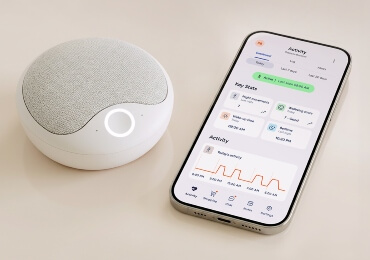 Systems like Sentai help to bridge that gap. By providing personalised voice prompts and daily structure, they can support your relative in maintaining their routines while giving you greater peace of mind. This can reduce the need for constant check-ins and allow families to focus on their shared experiences, rather than managing tasks.
For Anne, who tested Sentai for Age Space, the biggest benefit has been the change it has brought to her relationship with her dad. “Sentai has given us more time to be father and daughter,” she explains, describing how having gentle prompts and check-ins handled by the technology means their conversations can focus more on everyday life rather than reminders and tasks.
Importantly, tools like Sentai are designed to be introduced gradually and adapted over time to support independence, reinforce routine, and provide reassurance; complementing human contact rather than replacing it. Used preventatively, technology becomes part of a well-rounded support plan, helping families feel more confident long before a crisis hits.
Loneliness is not inevitable in later life and living alone does not automatically mean someone will feel disconnected from others. Many older adults value their independence and maintain rich social lives. The key is finding the right balance between supporting someone and giving them autonomy.
In practice, this usually means combining regular human contact with encouragement to stay independent. Planned  phone calls, visits or shared activities provide reassurance, while allowing someone to manage their own routine preserves dignity and confidence. Small adjustments, such as addressing other health concerns, arranging transport where needed, simplifying devices, or adapting the home environment can support someone to continue to live independently, well and safely in their own home.
For families caring from a distance, assistive technology can add an extra layer of reassurance. These tools can support routine, communication and confidence without replacing the so important real human element.
With the right mix of family contact, practical support and technology, older relatives can continue to feel connected, confident and supported in everyday life, wherever they live.