Independent review for Age Space
“Sentai gave me space to have normal conversations with Dad instead of sounding like a checklist.”
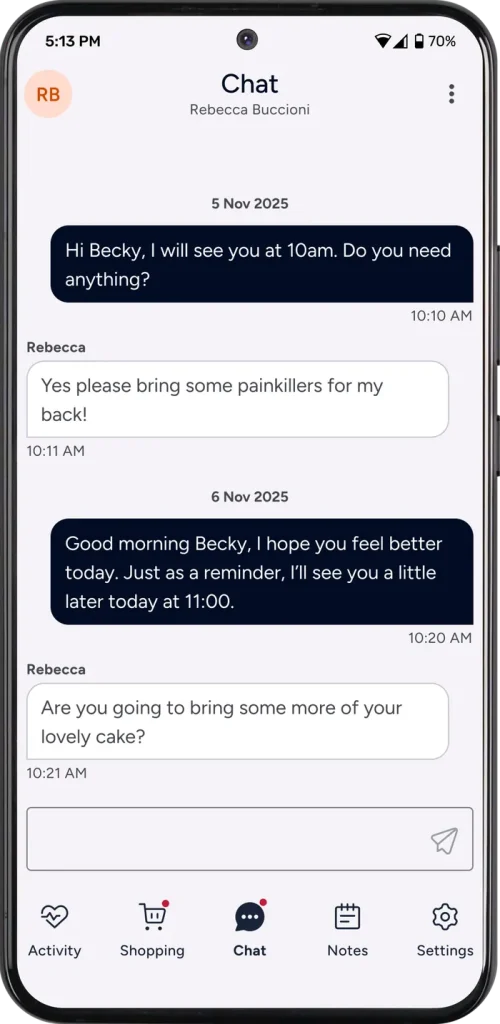
- Helpful, personal reminders- Movement alerts to see if Alan had been to the kitchen- Messaging option so Anne could alert Alan to the time of her next visit
We liked the concept of Sentai and wanted to put it in the hands of a family that might actually use it to get their thoughts.
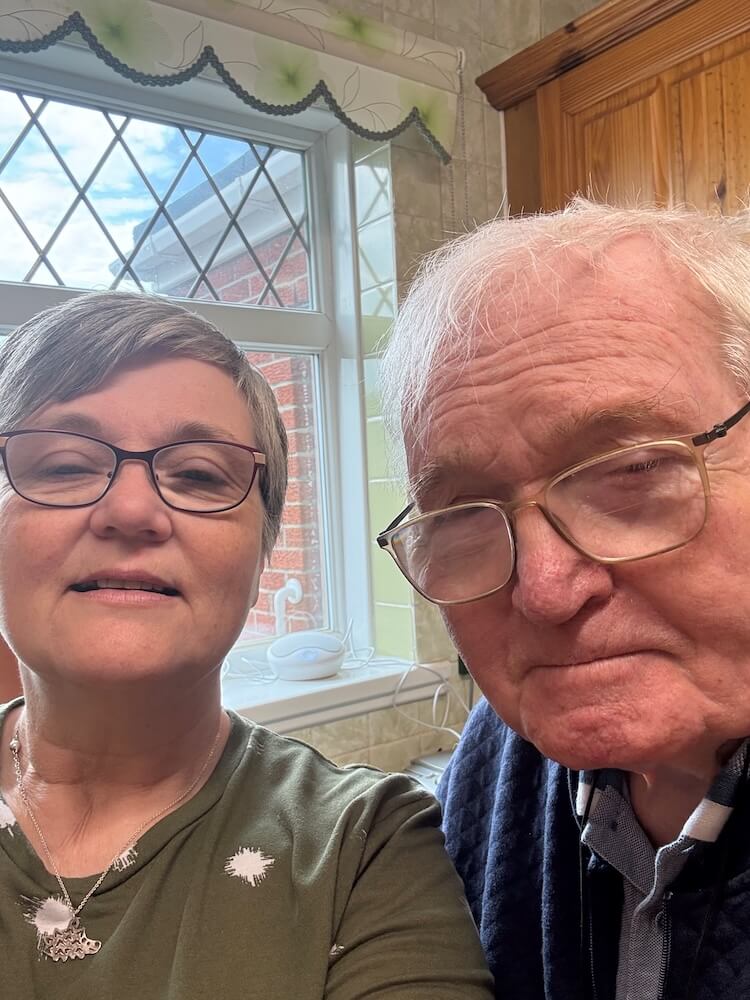
Allow us to introduce Alan, aged 90, who is living with dementia, and lives 140 miles away from his daughter Anne, aged 56. Alan lives alone with no carers but uses an iPad. Anne uses lots of technology to help Alan out including cameras, a tracker watch and falls monitor pendant.
“Firstly we would like to say what a brilliant opportunity this is to try something out. There are so many devices out there and it’s really difficult to choose without having a go. Hopefully our experience will help you decide if this will work for you”.
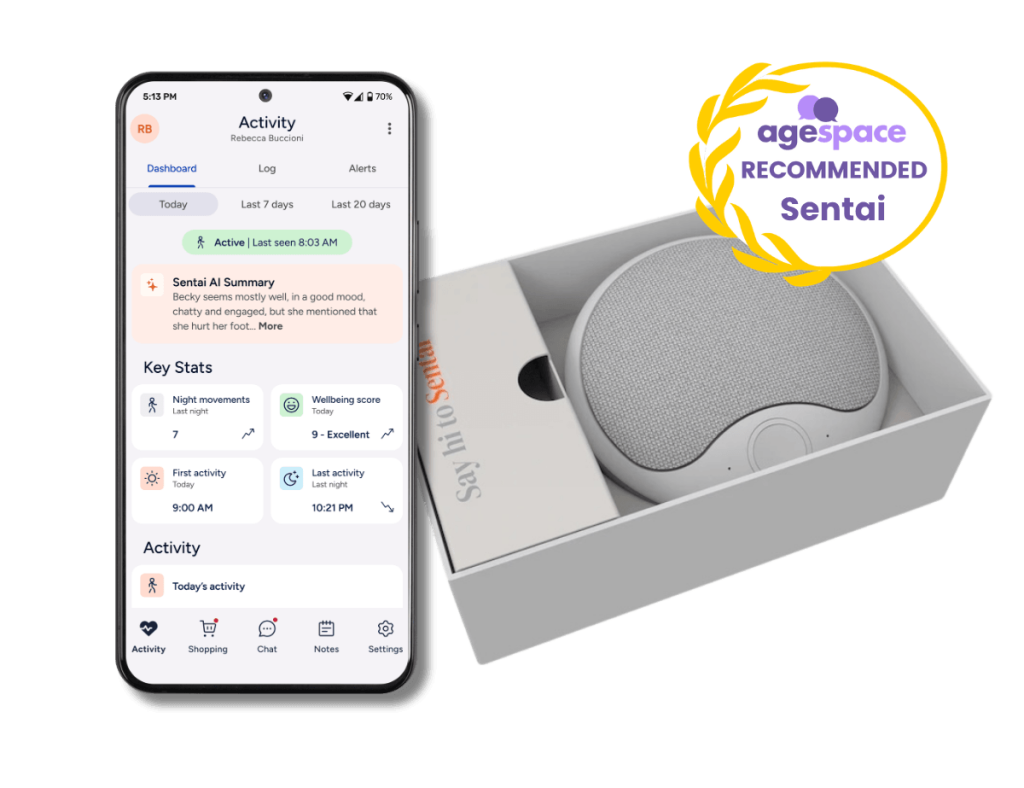
According to Sentai, the product is a voice-enabled smart companion for the home. It offers daily check-ins, wellbeing support, and real-time updates through a connected app – keeping users safe, families reassured, and care teams informed.
Unlike other voice assistants, Sentai is purpose-built for care, offers natural conversations, daily reminders, and voice enabled messaging with loved ones—delivering just the right support, without compromising your privacy or freedom.
Simple to set up and easy to use, Sentai supports daily routines, helps reduce loneliness, and flags concerns – like missed medication or long periods of inactivity.
Sentai runs on its own smart speaker with a precision microphone, an in-built presence sensor, and optional add-on sensors for extra features. Sentai’s AI-powered analytics identify when help is needed, highlight emerging problems and provide insight into daily activities.
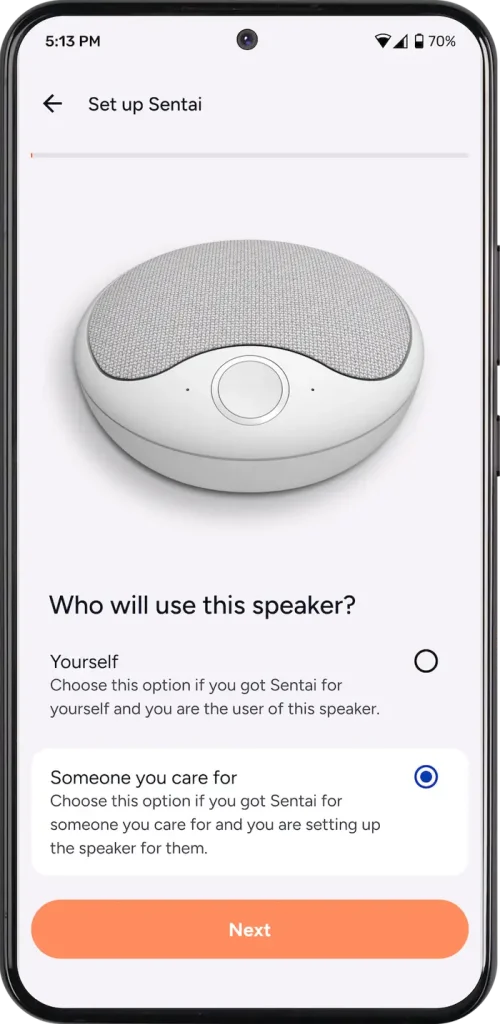
First I needed to set up Sentai. It consisted of 3 steps and took around 10 mins all in all:
The first decision was where to place the small device in Dad's house for it to have maximum effect – a room where he spends a lot of time. I placed it in the kitchen so he could hear it throughout the ground floor. This also meant that I could tell via the app if Dad had been in to the kitchen and had a drink – as we were testing it in the summer during a heatwave – this was particularly important.
I downloaded the Sentai app and followed the set up instructions. Despite some initial confusion waiting for an amber light to confirm it was ready this only took around 10mins.
I found my way around the app easily, and initially set up lots of conversation prompts, wellbeing rating, questions about specific topics, along with medication reminders, meal time triggers and various diary reminders.
I initially set up lots of conversation prompts, along with medication reminders, meal time triggers and various diary reminders.
Over the first few days I reduced the number of reminders I had originally set up – to a medication reminder at 9am and a drink reminder daily at 11am. A further drink reminder for the afternoon was also added.
If Sentai sounds like something that may be useful for you and your family, you can try Sentai for 30 days with a money-back guarantee if you don’t like it.
Before Sentai, Anne would have to call Alan 5 minutes before his laughing yoga, or before any other Zoom appointment Alan had. Anne was able to set up Sentai to do this instead which worked perfectly.
Medication reminder
Time to get some water
Zoom Yoga
I found the movement alerts were great in the day as could tell if Alan had been in the kitchen at all. There were some inconsistencies with the movement alerts during the night, but these were resolved by the Sentai customer team.
The movement alerts allowed me to be reassured that Dad was still at home, getting on with life, and eating and drinking normally.
We have experience of another voice enabled device which only requires the actual instruction to respond. I soon realised with Sentai to add an introductory “Hi” when communicating with it to elicit a response. This was added to the Sentai sign I put above the device for Alan to remind him how to interact with it.
I initially set up the device in “Chatty mode” thinking it would be more friendly than their other device. Alan found this mode irritating very quickly, so, from my home 140 miles away, I was able to easily change to “concise” mode. This less chatty version is still chatty, and perhaps an in between mode could be created, maybe as the chat feature improves a slider for “chatty-ness” could be implemented.
We both really enjoyed using the messaging option. I could say “Dad, I’ll be there at 12:30 today”, he would hear it and his reply was sent back to me in the app, so I knew he had heard and acknowledged it. Much quicker and less fiddly than a text.
The team were helpful and very supportive along with really prompt responses. The customer service and support was outstanding.
“This I honestly believe is the one thing you really have to consider when you are looking for a new product and even more important if you live so far away from your parents”.
The team suggested I enable all the features so Sentai chatted to Dad throughout the day. This didn’t really work but I felt it could work for other people – Sentai drops in to say “hi” and asks the user how their day is going, how they slept or if they need help with anything.
The Sentai team helped me to personalise my name as it appeared for Dad so that he knew a message was from me.
“We both feel this is a very useful tool, more likely if you are a little younger (Alan says 80 rather than 90) and maybe even if you have just been diagnosed with dementia, it would be invaluable in reminding you of medication and time to do things etc”.
“I’ve really enjoyed having normal conversations with Dad and letting Sentai do the checklist for me. I’ve always said being a daughter, a carer and a power of attorney is a full time job and Sentai took away some of the mundane tasks that are needed every day”.
The set-up process is simple. You are walked through every step, although Anne was initially a bit confused waiting for the warm-up light to come on, but this was easily resolved.
This is probably the biggest challenge with Sentai as many of our older generation will not have any experience interacting with things like this. Like any smart speaker, Sentai / works best with loud, short and clear statements. Unlike other smart speakers though, Sentai works best with friendly introductions such as "hello" or "hi".
The app is clear, simple and bright. It was easy to add medication and other reminders and the colour coded alerts made it clear if there was ever anything to worry about.
Second to none. A few times we spoke to the customer service team for minor hiccups and they were brilliant.
With an annual plan costing £294, customers receive a £60 discount, to pay an equivalent of £24.50 per month.
On a monthly rolling contract, the cost is £29.50 per month.
Sentai offers a 30-day money back guarantee, and leases the product to the customer for the duration of the contract.
We think it is great value because it solves a few problems in one. It can be used like a personal alarm (£170 +), a smart home monitoring system (£350+), a pill reminder system (£20) and it does it all in a way that breaks up the day for lonely people with a friendly voice. It can delay the need for extra help or care and keep older people living independently for longer, while providing reassurance to families.
Anne and Alan are not affiliated with Sentai and gave us, and Sentai, their unbiased thoughts after living with it for a few weeks. We asked for Sentai to provide Anne and Alan with a device to test and they shared their images with us.