“I don’t want this to happen around me; I want it to happen with me. If I talk about it now, I’m not a passive person in the middle of my own life.
“At the moment, I want to stay in my house, but it might get harder. These aren’t gloomy conversations; they’re just realistic. Facing the big stuff early makes it smaller.”
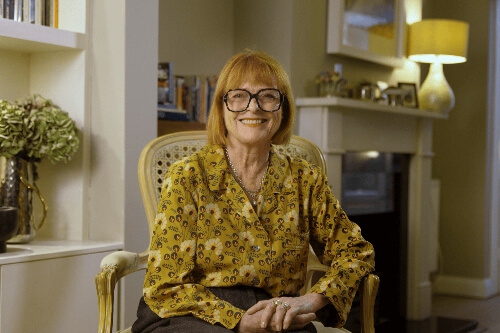
As part of our new campaign, Prepare to Care, Age Space founder Annabel James sat down with former Blue Peter presenter, author and broadcaster Janet Ellis. During the conversation Janet talked candidly about ageing well, staying open to change, and why difficult conversations about the future can be the most empowering of all.
This stage of life…
“There’s a lot more life behind me than there is in front, and I should start thinking about that.” It’s a typically wry reflection from Janet Ellis as she talks about ageing – with warmth, humour, and a very practical streak.
“I think ageing well has changed over the last few years,” she says. “Judging by Instagram, there seems to be a terrible obligation to get to 80 and still be able to do 15 headstands. You don’t have to! For me, ageing well is about acknowledging where you are and not being over-ambitious. There are still things I want to do, but I don’t want to get myself in a pickle by setting ridiculous agendas.”

Instead, Ellis believes ageing well means living in the moment and giving yourself permission to slow down. “Sometimes I’ll be more tired or take longer to understand something – and that’s fine. You have to allow yourself that.”
But she’s also quick to add that life shouldn’t become too safe. “You have to stay a little bit scared of things. Do the daunting things. If your horizons meet you here,” she gestures close to her face, “then your world becomes too small.”
Facing the daunting stuff
Daunting, Ellis admits, doesn’t have to mean bungee jumping or mountain climbing. It can mean paperwork.
“There’s a lot of admin to do as you get older – writing a will, sorting a power of attorney, all that stuff. We’re not good at thinking about it,” she says. “Since John died five years ago, I’ve had to take on things I never used to do. I’ve got wonderful family and friends, but it would be silly to pretend I find it easy.”
One of her biggest lessons has been learning to ask for help. “I used to hate admitting I needed help. Now I find it easier. It makes the daunting things much smaller when someone helps you solve them.”
Keeping the conversations going
Ellis doesn’t see planning for later life as a one-off task. “It’s not something you tick off the list. It’s ongoing. It’s about how you live, how you spend your money, how you go on holiday – everything.”
That includes tackling the practical side of things she used to avoid. “I’m not good with facts and figures. John was. It would be easy to find someone else to do it, but I want to understand it myself. The more you know, the less scary it is. And the more familiar it feels, the less you have to keep thinking about it.”
Learning from her parents
Her father, she says, was a brilliant planner. “When he died, everything was in order. He had a file for us – it was all there. It was a real life lesson: make sure you understand what’s happening around you before you don’t understand very much at all.
“For the people who are left, it’s bliss to know what you wanted and when you wanted things to happen.”
Most families aren’t prepared for later life - and that can make a hard moment even harder.
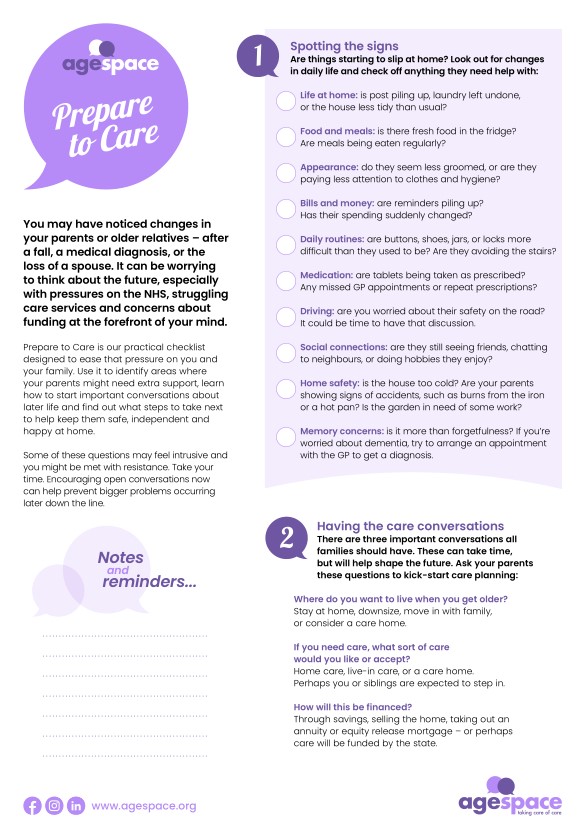
Download our handy checklist to take the first steps today
- Free Checklist
- Exclusive extra content via email
For someone to download / redirected to the Prepare to Care checklist and receive the email journey
No Spam. Unsubscribe Anytime. View Privacy Policy
It's still you
Ellis’s best advice for anyone thinking about ageing and care? “Remember it’s still you. Age doesn’t redefine you. You don’t suddenly wake up with wisdom or lose all intuition. You’re making decisions for the same you – just with more experience.”

She rolls her eyes at the clichés of “silver-haired seniors living their best life.”
“I’m not that person,” she laughs. “I’m messier! My take on life is different. So I’m having these conversations as me – the same me I’ve always been.”
And that, she says, is why it’s so important to have the talk early and honestly. “If you leave it, it doesn’t get easier. The questions don’t get fewer – they get more. So just start. Ask three simple things: Where do you want to live? How do you want to live? And who’s going to pay for it?”
“It’s never too early – but it can be too late.”
For adult children worried about raising these topics with parents, Ellis is sympathetic. “It’s really hard for younger people to start that conversation, but it’s never too early. It can feel too late, but it often isn’t. Just start somewhere, weave it in with everything else. It doesn’t have to be formal – it’s part of life.”
She admits that even in her open family, these talks aren’t fun. “We don’t look forward to them! It wasn’t easy with John. But I’d rather have had those talks with him than not at all.”
Finding joy in the years ahead
Despite the practical focus, Ellis radiates optimism about the future. “My fun plans are to keep saying yes to things – but also knowing when to say no,” she says. “There are things I tried because I thought, as a widow, I should. They didn’t feel right, and that’s okay. I don’t have to do them again.”
Her philosophy is simple: make the most of time, without being ruled by it. “When you get older, there’s a sense of, ‘If I don’t do it now…’ But you don’t have to rush. Some things belong to earlier chapters. Others are still to come.”
And if she could leave one final thought? “Don’t put pressure on yourself to feel comfortable about ageing every day. You don’t have to have the big conversation when you don’t feel like it. It’s personal. Just start somewhere – and keep living.”
Prepare to Care – as Janet Ellis shows – isn’t about fearing the future. It’s about claiming it, one heartfelt conversation at a time.
Find out more about our Prepare to Care Campaign.
Download our Prepare to Care checklist for everything you need to get started.
Go to our Prepare to Care hub to find out more information on all things elderly care.