We are delighted to welcome Fiona Brannigan (Bsc Hons RD) as our nutrition expert.
Fiona is a registered dietitian specialising in helping individuals over 50 manage their health conditions and gut symptoms.

I am sure you don’t need reminding that the cost of the weekly food shop continues to increase. Price information from the Office for National Statistics (ONS) confirms that the overall price of food and non-alcoholic beverages rose around 25% between January 2022 and January 2024. In the 10 years prior to this prices rose by 9%.
You may be wondering how you can spend less on your weekly shop and still eat a diet that gives you all the nutrients you need and keeps you well.
In this article, I hope to give you some nutritional advice for older adults and practical tips that you can implement to help save some money on your weekly food shop. Please note that all prices are from Tesco online and were correct as of October 2024.
1. Revisit the basics: Key strategies to help you save on your weekly shop
Now bear with me on this one! I know that you will have run a home for some time, however it is always worth reminding ourselves of the basics:
Making a meal plan for the week
Allows you an overview of the week and can help you make sure you are getting your 2 portions of fish (one being oily), red meat twice a week and a good variety of fruits and vegetables. If, like me, you find deciding what to make for dinner each night a challenge at times ask your friends what they are making or head to BBC Good Food for free recipes.
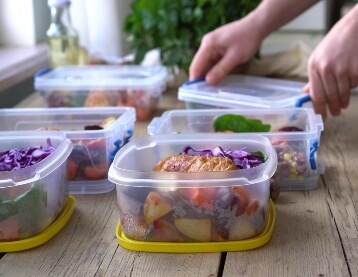
Check your cupboards and freezer
Before planning your meals for the week. This can help reduce food waste, stops you ‘stockpiling’ and spending unnecessarily and allows you to see what needs replacing so you always have a well-stocked kitchen.
Buying in bulk is often cheaper
Supermarkets tend to offer the biggest discounts on ‘bulk’ buys. These are great if they are non-perishable goods and you can store them. Bigger packets of poultry, fish and meats can be split up or you could cook them and freeze so you have an ‘easy’ tea one night. But of course it is only a bargain if you are going to use it!
Cook once, eat twice
Batch cooking is a great way to make multiple portions of something tasty that you can then freeze and have another night and let’s face it who doesn’t like a night when you don’t have to cook!
2. Choosing healthy and cheaper food options
Fresh, tinned and frozen foods
It can be difficult to buy a wide variety of fruits and vegetables in supermarkets and this is where frozen, tinned or dried versions are helpful.
These products contain just as many vitamins, minerals and fibre as fresh and often if frozen contain more vitamins.
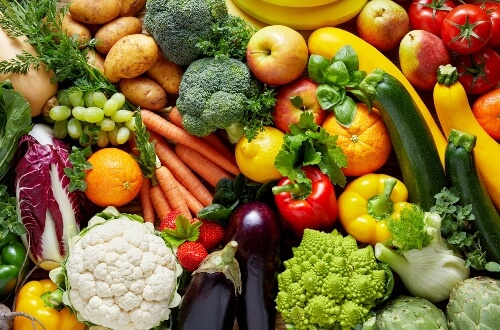
Not only are frozen and tinned fruit and vegetables just as good for you as fresh they are also cheaper:
- Tesco pack of 4 fresh pears – £1.79 Vs tinned pears – £1.10 – Saving 69p
- Tesco frozen broccoli florets – £1.19/kg VS fresh broccoli – £2.19 – Saving £1
As well as benefiting you bank balance, buying frozen, tinned or dried fruit and vegetables can also help with reducing food waste, enabling you to enjoy produce out of season; and easier to buy more portion friendly mixes will provide you with a variety of different vitamin and minerals and keep your gut healthy too.
3. Save money on meat
The most expensive part of your diet will be meat – red meats, poultry and fish. As you get older you need to eat more protein to help maintain your muscle mass which is important to help you live independently. You get protein not only from meat, poultry and fish but also eggs, milk, yoghurt, beans, pulses, legumes, Quorn, tofu and Tempeh (soy product like tofu). You should be having a source of protein at each meal. Here are my top tips for saving money whilst still getting the protein you need:
Choose cheaper cuts of meat
Often these are very flavourful if cooked slowly and a slow cooker is great for this. It is cheaper than cooking in an oven, you can put it on in the morning and go about your day and is great for batch cooking. Your local butcher is also a great resource at advising you what cuts are best for long, slow cooking.
Did you know that chicken thighs are not only cheaper but also contain more iron?
Stretch your budget with cheaper protein sources
Adding legumes – beans, peas and lentils – and pulses into a casserole are a great way to make your meat go further.
These are low-cost, affordable sources of protein and fibre and are preferable to adding extra vegetables.
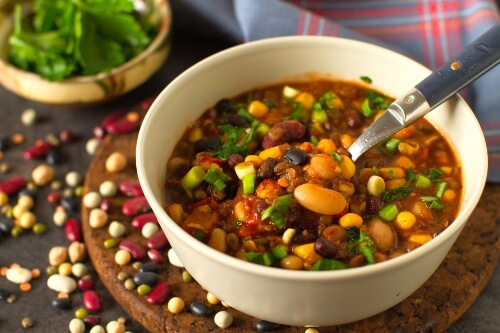
Also look at having a meat free meal once a week, however always make sure that it contains beans, pulses, legumes, milk, eggs or cheese so that you are getting adequate protein.
If you have fruit, vegetables and meats, fish and poultry in tins or your freezer if you become unwell or are unable to get out for whatever reason you will always be able to eat well.
4. Going shopping and saving money
Be aware of supermarkets tactics to get you to spend more
Supermarkets are BIG business therefore they have a variety of tricks to get you to spend more:
- Place the most expensive, often branded items at eye level. By looking up and down the shelves you will very often get cheaper and own brand products.
- Play slow music to get you to spend more time walking round.
- Place essential items at the back of stores so you need to walk round the store to get them.
- Use words or phrases indicating luxuriousness such as extra special, premium, luxury, signature and exclusive to name a few. These words are often found on their own brands one to watch out for are those used on ready made meals, biscuits, cakes, desserts and other processed foods, with the products being sold at a higher price point.
Convert to own brands to help you spend less
Do you only buy Heinz baked beans or Kellogg’s cornflakes?
You pay a premium for branded products and nowadays supermarket own brands are just as tasty. Heinz beaked beans cost 65p for a small (150g) tin and Tesco own brand cost 23p for a slightly bigger (220g) tin.
My mum would never of bought any other brand of baked beans than Heinz. However, when she was waiting for her new hip she was only able to go to Aldi’s and started eating their beans. Now she is sold on them!

Heading to the freezer section can have some serious cost savings
Often fish and chicken is cheaper if brought frozen, although my research found that mince did not work out cheaper. Here are some price comparisons:
Fresh chicken breast meat – £6.58/kg VS frozen chicken breast – £4.25/kg – saving £2.33. Please note this is for large packets.
Fresh cooked sliced chicken breast meat – £1.94/kg VS Frozen sliced cooked chicken – 91p/kg – saving £1.03
Fresh Salmon – £18.65/kg VS Frozen salmon – £11.10/kg – saving £7.55
Buying a whole chicken is undoubtedly cheaper than buying individual portions. If you are planning out your week you could plan for a roast, and then sandwiches, a pie or a curry or freeze along with leftover gravy. Or how about inviting a friend over for company over a meal? It can be a lovely thing to sit at a table and chat to someone over a meal, and hopefully they will return the favour!
Does where you shop make a difference to the cost of your food bill?
Yes! Changing where you buy your shopping altogether, can make a real difference to your weekly spend. If you shop at Waitrose you could try Sainsburys or Morrisons. If you normally shop at Sainsburys or Morrisons you could try Tesco. Asda is cheaper than Tesco followed by Lidl and Aldi.
It is also worthwhile mentioning loyalty schemes. In some super markets you an get cardholder only deals on certain products or gather points towards other items, it is worthwhile looking into the schemes that your supermarket uses.
You may have local, independent shops local that you wish to buy from. Often these sit at a higher price point but they do offer a more personalised service, such as delivery as well as their years of personal experience and recommendation. They will also be better able to sell you smaller quantities. You will be supporting a local business and helping keep the high street thriving. You could combine shopping this way with buying your non perishable goods at a discounted store like Lidl or Aldi.
Is it worth buying reduced priced food to save money?
We all love a bargain don’t we? Supermarkets often reduce the cost of items that are going out of date at the end of the day (look for the yellow stickers).
This can be an appealing way to save money, however for older adults who are at a greater risk of infections it is something to be treated with caution.
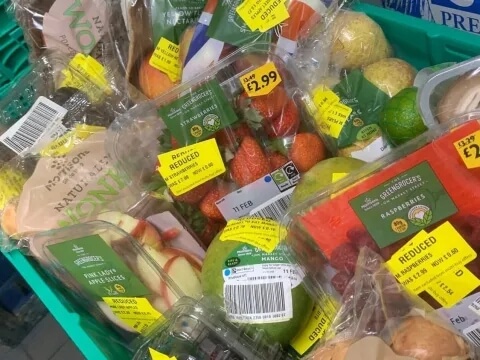
As you get older your sense of taste and smell become less strong so you could be eating something which smells and tastes fine to you but maybe going off.
- Use by dates are all about food safety
- What you are eating could smell or taste fine but could make you quite unwell. It is fine to eat it up to midnight on the date but not after unless it has been cooked or frozen.
- Best before dates or BBE (best Before End) dates are all about quality.
- So the food may be fine to eat but might not taste just as good. You will often find best before dates on tinned, dried and frozen foods.
The food standards agency have a good article on their website f you would like more information;https://www.food.gov.uk/safety-hygiene/best-before-and-use-by-dates
Food is so important on both a practical and emotional level, never more so than in older age. It not only helps you to fight infections, maintain muscle strength to help enable you to continue do the things you love and to live independently for longer but also reduces GP appointments and admissions to hospital. Food should also be a source of enjoyment for you.
Fiona Brannigan (Bsc Hons RD) is a registered dietitian specialising in helping individuals over 50 manage their health conditions and gut symptoms. With nearly 25 years of experience, she’s dedicated to giving her clients confidence in their diet so they can enjoy a full and vibrant life without second-guessing every meal. Fiona offers practical, personalised nutrition advice tailored to the needs of older adults. Her passion is empowering people to make informed dietary choices and improve their well-being. Want to find out how Fiona can help you or a loved one? Check out her website: Inspirit Nutrition and Dietetic Consultancy – Nutrition & Diet Advice