The independent Casey Commission, led by Baroness Louise Casey, has been established by the UK government to develop comprehensive reforms for the adult social care system in England. Its primary objective is to build a “national consensus” on addressing the longstanding challenges within the sector.

Health and Social Care Secretary Wes Streeting announced on 3 January 2025 that he had tasked Louise Casey, a former senior official who has led previous high-profile reviews, to chair a Commission to decide how social care should be organised and funded.
The Labour government said in its manifesto before the 2024 elections that it would create a “National Care Service” to meet the needs of vulnerable people and better integrate social care with the state-funded National Health Service.
There have already been multiple policy papers, inquiries and reports into social care this century, but governments have failed to find a fix for the sector and to agree how it should be funded in the long term.
What will the Casey Commission look at?
The Government is asking the Commission to undertake a thorough examination of the adult social care system, focusing on:
- Identifying critical issues: Assessing the immediate and long-term challenges facing adult social care, including underfunding, staffing shortages, and increasing demand.
- Developing sustainable solutions: Formulating recommendations for effective service delivery and sustainable funding mechanisms to ensure high-quality care.
- Integrating services: Exploring ways to enhance integration between social care and the National Health Service (NHS) to improve overall efficiency and patient outcomes.
What is the timescale for the Casey Commission?
The commission’s work is structured into two phases:
Phase One Beginning in April 2025, with findings expected by mid-2026.

Focus: Identifying the critical issues facing adult social care and proposing medium-term recommendations to address these challenges.
Phase Two Follows the completion of Phase One, with a final report due by 2028.
Focus: Making longer-term recommendations for the transformation of adult social care, including considerations for funding and service organisation.
Wes Streeting says this structured approach aims to address immediate concerns while formulating sustainable, long-term solutions for the future of adult social care in England.
Sir Andrew Dilnot, who led the last social care commission in 2010-11, said Casey should be able to deliver her recommendations by the end of this year (2025), and would only be prevented from doing so by a lack of political will from government.
What other reforms are under way?
The Health Secretary has announced some immediate measures to address pressing issues in the adult social care sector, alongside the long-term objectives of the Casey Commission. These include:
- Additional Funding – An extra £86 million has been allocated to the Disabled Facilities Grant, enabling elderly and disabled individuals to make necessary home improvements that support independent living and reduce hospital admissions.
- Cross-Party Talks – Initiating discussions with opposition parties to build a national consensus on social care reforms, aiming for collaborative solutions that ensure long-term stability and effectiveness.
- Alongside the funding, the Government’s immediate action to support adult social care also includes harnessing the power of care technology to transform care and support older people to live at home for longer, cutting red tape to ensure billions of joint NHS and social care funding is keeping people healthy and taking pressure off the NHS, as well as improved career pathways for care workers and new national standards to ensure providers and families use the best care technology.
Who is Baroness Casey?
Baroness Louise Casey is a prominent British public servant, widely recognised for her extensive work in addressing social challenges, particularly in the fields of homelessness, social inclusion, and community cohesion.
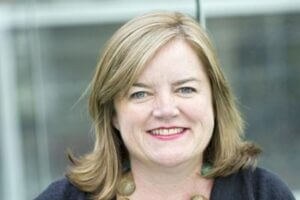
In 2020, Louise Casey was appointed to the House of Lords as a crossbench peer, becoming Baroness Casey of Blackstock.
She is known for her pragmatic, results-oriented approach to policy and her ability to confront uncomfortable truths. She is often described as a “straight-talking” and “hands-on” leader who prioritises practical solutions over bureaucratic processes.
Getting a feeling of déjà vu?
The past 27 years have seen two government commissions, one shorter government-commissioned review, three independent commissions, five white papers and 14 parliamentary committee inquiries on social care reform. And there have been countless other policy papers and reports on social care.
Numerous reviews, including the 1999 Royal Commission and 2011 Dilnot Report, proposed solutions like capping care costs, yet successive governments have failed to implement them comprehensively.

Theresa May’s so-called “dementia tax” was a controversial social care funding proposal included in the Conservative Party’s 2017 general election manifesto. It suggested changing how people paid for care in England by introducing a new system where individuals needing care at home or in residential settings would have to cover their costs if their total assets, including the value of their home, exceeded £100,000.
Boris Johnson’s “death tax” jibe referred to a controversial label used during the 2019 general election campaign to criticise Labour’s proposed social care policy which had suggested funding social care reforms through inheritance taxes or other levies on estates.
Johnson’s own policy was the Health and Social Care Levy, announced in 2021. It introduced a 1.25% rise in National Insurance contributions, set to be formalised as a separate tax from 2023, and promised a cap of £86,000 on individual care costs over a lifetime. The levy was scrapped in 2022 under Liz Truss’s government, leaving reform efforts unresolved and exemplified the politically charged debates which have surrounded social care reform in the UK.
Context - Why this matters so much
The UK’s demographic landscape is shifting towards an older population. By 2039, the number of people aged 75 and over is projected to double from 5 million to nearly 10 million. Additionally, the population aged 85 and over is expected to almost double in the next 25 years, increasing from 1.7 million in 2020.
These trends indicate a growing demand for care services, potentially intensifying the reliance on unpaid carers.
Unpaid carers play a crucial role in the UK, providing care worth an estimated £184.3 billion annually – a 29.3% increase since 2011. This economic contribution surpasses the entire NHS budget for England, which was £156 billion for 2020-21.
The number of unpaid carers in the UK is significant, with estimates ranging from 6.8 million to as high as 10.5 million.
The challenges ahead:
- Increased demand for services:
As the population aged 75+ and 85+ grows significantly, the demand for long-term care, including residential and domiciliary care, will rise sharply. Conditions like dementia, which require intensive, long-term support, are expected to become more prevalent. - Workforce strain:
Health and social care sectors face staffing shortages, with recruitment and retention issues exacerbated by an ageing workforce, Brexit, and limited funding. - Rising costs:
The financial burden on the NHS, local councils, and individuals will grow. Current funding models may prove unsustainable, with increased pressure on unpaid carers and the need for innovative funding solutions. - Chronic and complex needs:
Older populations often have multiple, coexisting health conditions, necessitating more integrated and specialised care approaches, which current systems may not fully support. - Housing and accessibility:
More older adults living longer independently requires housing that supports accessibility, alongside community-based services to reduce hospitalisations.
We’ll be updating information about the Casey Commission as it gets going.
You can find out more at .gov.uk