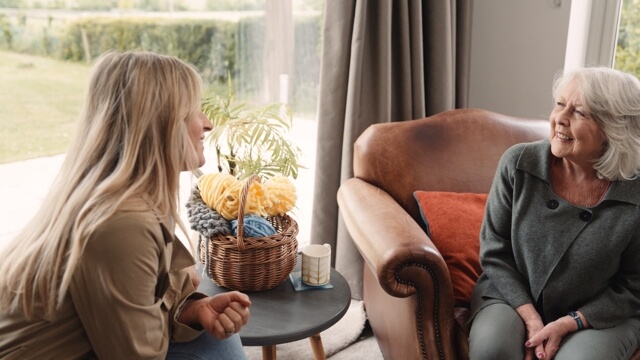

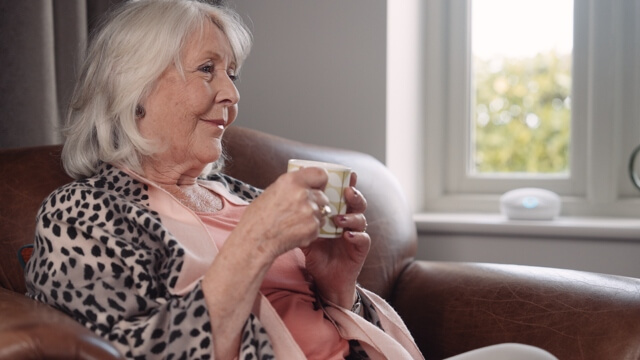
One minute you’re preparing for a meeting. The next you’re arranging a GP appointment, chasing a prescription, speaking to a social worker, or wondering whether your mum remembered to eat lunch.
This is the reality for millions of working carers across the UK. Caring creeps into everyday life until one day you realise you’re effectively managing two full-time roles – and that neither is getting your full attention.
According to Carers UK, nearly 2.5 million people in employment are also providing unpaid care in England and Wales, with more than 433,000 providing significant levels of care while continuing to work.
Recent research by Sentai found that almost a third of carers live in a state of constant worry when they’re not with the person they care for. For those trying to hold down a job at the same time, that anxiety doesn’t clock off at nine.
A workforce under pressure
Research from Carers UK estimates that around 600 people leave work every day to care for an older, disabled or seriously ill loved one. Many more reduce their hours, decline promotions or quietly step back from careers they’ve spent years building – not because they want to, but because the alternative feels impossible.
If you’re one of them, it’s worth knowing what you’re entitled to. The Carer’s Leave Act, which came into force in April 2024, gives employees the right to take up to one week of unpaid leave per year to provide or arrange care for someone with a long-term need. It can be taken in half-day or full-day increments – and crucially, it’s a day-one right, meaning there’s no minimum length of service required before you can use it. You also don’t have to provide proof that you’re a carer. Flexible working rights were also strengthened at the same time, giving employees the right to request flexible arrangements from their very first day in a job.
These are meaningful protections. But knowing they exist is only useful if you feel safe enough to use them – and for many carers, that’s still far from guaranteed.
Why it feels impossible
Unlike childcare, where routines are broadly predictable, caring for an elderly relative rarely is. A hospital appointment that should take two hours becomes a whole day. A parent who was coping well suddenly needs considerably more support. A fall changes everything.
Even when carers are physically present at work, part of their attention remains elsewhere. Did Dad take his medication? Has Mum eaten? What if something happens and nobody answers? The cumulative weight of that uncertainty is exhausting in a way that’s difficult to explain to someone who hasn’t experienced it – and difficult to acknowledge in a professional setting where admitting vulnerability can still carry risk.
For those supporting someone from a distance, the isolation is compounded. When you can’t simply call round after work, guilt and anxiety fill the gaps that proximity might otherwise close.
The emotional cost nobody talks about
Much of the conversation around caring focuses on logistics. The emotional dimension is harder to measure, but often more corrosive.
Many carers describe feeling torn between competing versions of themselves: the son or daughter who wants to
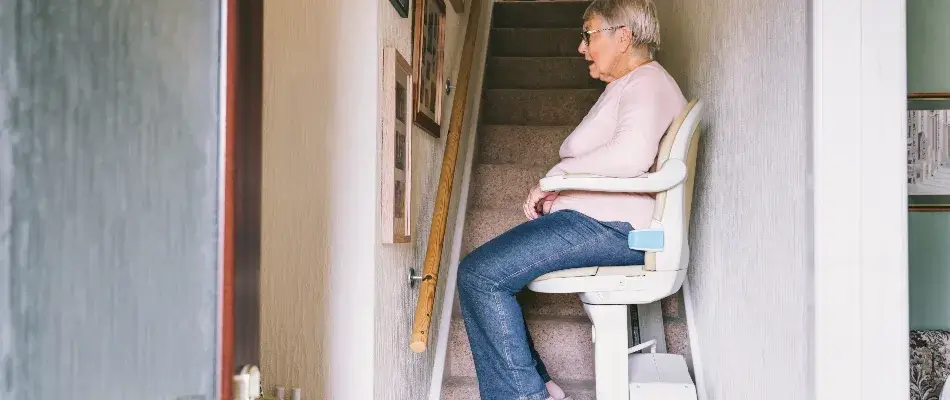
be present, and the employee who needs to be reliable. There’s guilt about not doing enough at home. There’s anxiety about being seen as less committed at work. And there’s a particular loneliness in carrying something so significant while pretending, to most of the world, that everything is fine.
For many, caring also arrives alongside other pressures: supporting children, managing their own health or navigating financial strain. The idea that any of this is manageable without support is a fiction too many people are still being asked to maintain.
What good support actually looks like
The good news is that meaningful support doesn’t always require large budgets or formal programmes. Many carers say the most valuable thing their employer ever did was simply acknowledge that caring exists.
Practical measures that make a real difference include flexible start and finish times, understanding when emergencies arise, the ability to attend appointments without penalty, and access to relevant information and signposting. Some organisations now offer carers’ networks and additional leave. Others are only beginning to have these conversations.
Importantly, culture matters as much as policy. Many employees hide their caring responsibilities because they worry about how it will affect their perceived commitment. Creating an environment where people feel safe to ask for support – without fear of being quietly sidelined – can reduce stress, improve retention and help people remain in work far longer than they otherwise would.
Making it more manageable day to day
There is no perfect solution. Every caring situation is different, and what works for one person won’t work for another. But there are practical steps worth considering.
If you haven’t already told your employer what’s happening, it’s worth doing. Many carers struggle alone for months before mentioning their situation, and while not every employer will respond perfectly, making your circumstances known opens the door to flexibility and support that otherwise simply won’t be offered.
Don’t wait until you’re in crisis before looking for help. Speaking to your local authority about available services, seeking advice from carers’ organisations or involving other family members can make caring more sustainable before the pressure becomes unmanageable.
And where possible, share the load. Many carers take on significantly more than they realise. Even small contributions from others – siblings, friends, neighbours, local services – can create breathing space that feels disproportionately valuable when you’re running on empty.
Staying connected from a distance
Technology can also make a real difference – particularly for those supporting someone from a distance. It can’t replace human care, but it can dramatically reduce the background anxiety that so many carers carry through every working day.
“What Sentai’s research makes clear is that for many carers, the hardest part isn’t being away – it’s the uncertainty of not knowing how a relative’s day is going. That’s the gap technology is increasingly able to bridge. Purpose-designed tools like Sentai use personalised voice prompts and a companion app to help older relatives stay on top of daily routines – medication, hydration, appointments – while keeping family members connected without the need for constant phone calls. For anyone supporting a parent or relative from miles away,
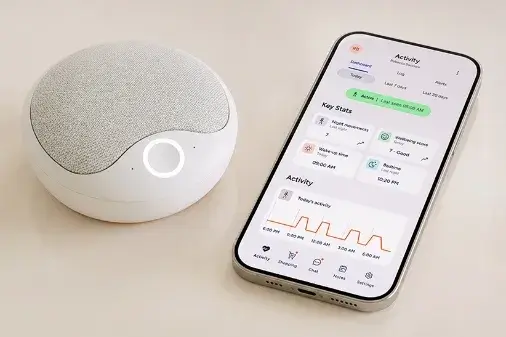
being able to glance at an app and know they’ve eaten, taken their tablets and had a good morning is genuinely transformative.
“Sentai has given us more time to be father and daughter.” – Anne, who supports her father from a distance.
That’s the point, really. The best technology doesn’t just provide reassurance – it changes the nature of the relationship, freeing up conversations for connection rather than checking in.

Looking ahead
As the population ages, the number of people balancing work and caring will only grow. The question is no longer whether this will affect the workforce. It already has. The question is whether employers, policymakers and society are prepared to respond to it seriously.
For individual carers, better support and greater awareness can make a genuine difference. Caring for someone you love will never be effortless. But it shouldn’t have to mean sacrificing your health, your career or your financial security in the process. Recognising carers, supporting them properly and helping them stay in work isn’t just good for the people doing the caring. It’s good for families, for employers and for all of us.
This article was written in association with Sentai.