


Long before dementia came into our lives, I think it would be fair to say my dad wasn’t overly enthused by Christmas celebrations. My recollections of my childhood Christmases are that Dad would get the tree in and provide vegetables he’d grown in the garden for the Christmas meal, but most of the rest of the festivities were my mum’s domain.
Dad always need to work on Christmas day when I was young – he was a cattle farmer and animals always need to be tended to – but he’d be home for the Christmas meal, mostly roast beef, he would be the one to ‘light’ the Christmas pudding.
I recall Dad wasn’t always the easiest person to buy presents for in my earlier life, something that ironically changed massively when he was living in a care home and there always seemed to be something he needed or that we wanted him to have.
Dementia is said to change much in the lives of those touched by it, but I can confidently say that my dad’s lack of enthusiasm for Christmas wasn’t one of those changes! Indeed, the very last Christmas Dad ever had at home was one he largely spent in isolation. He didn’t want to join in the trip to church on Christmas morning, wouldn’t open presents and wasn’t bothered about the meal.
It felt very fragmented, not united as a family Christmas is often depicted as, but on reflection perhaps we were all more united than we realised, all of us feeling silently confused in our own ways. We all felt worried about my dad, we knew something wasn’t right (we’d known that for a long time), and I recall earnest conversations about what we all thought might be wrong and what the future could hold.
Just a few months later we’d have an answer for all that had happened with Dad in the previous 10 years when we were told he was living with vascular dementia. He’d collapsed from a larger stroke (he’d been having mini-strokes or TIA’s (Transient Ischemic Attacks) in the years before) and went from hospital to a care home.
We’ve put together a list of 10 early signs of dementia for you to look out for, and some specific symptoms you can monitor.
What I learnt about Christmas celebrations during my dad’s years with dementia
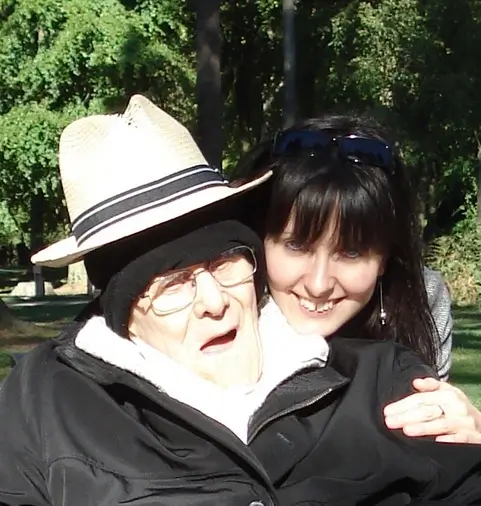 Accepting that the traditions you’ve had as a family may need to be reinvented or discarded is an emotionally tough realisation but an important one to make peace with.
As Christmas at home subtly changed with Dad not wishing to participate in things, I’ve reflected that we’d all have coped much better with that final Christmas at home, and the ones that proceeded it, by working with Dad rather than trying to cajole him into doing what we’d always done or thought we should be doing.
Those battles were characterised by frustration that plans weren’t working out, and fear: Why was Dad so withdrawn? What was wrong?
Those memories of Dad’s last Christmas at home remain very sad ones for me, but they are counterbalanced by some surprisingly happy Christmases in Dad’s care homes.
My next tip really follows on from the above: Don’t be afraid to downsize the celebrations. We all feel under so much pressure to ‘do’ Christmas in a certain way, but the most important aspects aren’t decorations, huge meals and expensive presents but time together, enjoying simple pleasures (sit by the window with warming drinks talking about the wintertime weather or get wrapped up for a walk or wheelchair ride together with those warm drinks in a flask) and reminiscing (not just about Christmas but about the person’s life story and the things that are important to them).
Downsizing the celebrations and getting back to the real essence of connecting with each other can also be a blessing for carers who may be dreading the festive season and feeling overwhelmed or guilty that they can’t ‘deliver’ Christmas like it used to be.
How Christmas practicalities change when a family member needs care
Those memories of Dad’s last Christmas at home remain very sad ones for me, but they are counterbalanced by some surprisingly happy Christmases in Dad’s care homes (dad lived in three different care homes over a nine-year period).
You might feel that if a family member has gone into a care home that Christmas will never be the same again, and to some extent that’s true – our Christmas morning trip to church was replaced by a Christmas visit to dad’s care home – but I have lovely memories of spending time with Dad, decorating his room, eating and celebrating with other residents, their families and the staff, and much festive cheer – including useful and meaningful presents that were often personalised – during the Christmases Dad was well (he was often poorly with chest infections or UTI’s).
Moving to a care home can be an emotional time for both loved ones and their carers. We've put together some expert tips to help make moving to a care home a bit easier.
How to look after yourself as a carer
What I believe Dad was trying to tell us by withdrawing from the Christmas plans in his early years with dementia were that they didn’t work for him, they weren’t at his pace, and they weren’t what he wanted.
When you are without a diagnosis as we were for 10 years and many families still are (Alzheimer’s Disease International say, ‘Up to three quarters of those with dementia worldwide have not received a diagnosis’) you are less likely to think about how modifying your expectations and planning could help overcome challenges.
When you realise that dementia is the cause of the changes in your family member, you are more likely to embrace the person’s reality, go at their pace, tone down both the busyness and noise of Christmas celebrations and get back to what really matters – being in the moment together.
This is perhaps best illustrated by something my dad said as we were leaving his care home one Christmas Day after sharing the festivities together. Dad was settling down to watch one of his favourite musicals (Oklahoma!) and completely took me by surprise when he said to me: “Thank you for everything.” That was at a time when dad barely spoke and those words that have stayed with me ever since.
As a carer, remember to be kind to yourself, especially at Christmas which can be an emotional and stressful time, even more so if you or your family member are struck down with winter illnesses and caring is even harder than usual.
Think about how and where you might go to let off steam or shed your tears – when we were caring for my dad, I’d often cry my tears in the bathroom in private – so many things would trigger these, including seeing dad poorly or visibly struggling – but in more recent times, as things are changing with my mum’s cognition, I’ve embraced getting outside for a walk (it might just be 10 minutes) to reset.
Elderly respite care aims to give the carer a break from their caring role. If you think this might help you, read our guide to the four types of respite care.
Gift ideas from my experiences of buying for my dad
When it comes to Christmas gifts these may also need modification from the usual. Be mindful that your family member may lose interest in opening presents or may reject things that are given (this can be very upsetting, but it’s important to realise this isn’t a personal attack on you).
- Don’t buy clothing you’ve always bought if your family member is struggling to get those things on and off or finds them uncomfortable. Search for alternatives, make sure they will withstand the laundry if your family member is in a care home, and ensure they are returnable if they aren’t liked.
- If food and drink preferences have changed adapt what you purchase, being mindful of any swallowing difficulties or contradistinctions with medication. My dad loved fruit smoothies in his later years with dementia – not something you’d ordinarily consider for a Christmas present!
- If books have always been a gift you’ve exchanged, look for ones that are dementia friendly – like those from Equal Arts and Cognitive Books – or consider audio books with a suitable device to play them on.
- Think about sensory pleasures – things that feel, smell, look or sound nice are often welcomed. A soft photo blanket, a personalised cushion (my dad had many of these), a favourite smell (Dad loved lavender), a bespoke photo collage (Dad had lots of framed photos, just remember to caption them to aid memory recall) and favourite music/films/documentaries.
The most popular gift we ever gave my dad was lots and lots of music on CDs. These days voice-activated devices are great for creating playlists, and one of the finest gifts you could give anyone living with dementia would be your time together to make a personalised playlist – Playlist for Life have free resources to support this. Remember to print off lyrics to favourite songs so you can sing along together too.
- Think about items that will help the person in living with dementia – explore tech options via ADAM and everyday living aids via the Alzheimer’s Society shop.
About the author:
Beth Britton MBE is an award-winning content creator, consultant, trainer, mentor, campaigner and speaker who is an expert in ageing, health and social care.
Whichever type of dementia affects your relative, there is support available. Find out which resources would be best for you and your loved one in our guide to dementia support.


