



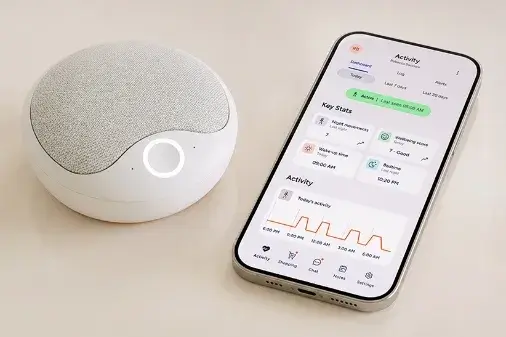
 Assistive technology devices are an umbrella term for tools that help someone live safely and independently at home. Some of it is designed for emergencies, but a lot of it is focused on everyday routines and keeping families connected.
Examples include:
- Medication reminders
- Voice prompts that support daily structure
- Sensors or alerts that flag changes in usual activity
- Tools that make it easier to stay in touch with family
Many families end up combining a few of these to create a set-up that works for their personal situation. Increasingly, tools such as Sentai, an easy-to-use voice assistant, are designed to bring several of these features together in one place, combining personalised reminders, daily structure and easier ways for families to stay connected, whilst also offer day to day companionship, reducing loneliness and isolation.
These terms are often used interchangeably, but they’re not quite the same thing.
 Telecare is typically the first port of call. It includes equipment like personal alarms, fall detectors and emergency call systems – things designed to alert someone if help is needed. These are often introduced after a specific health event and focus on achieving a rapid response if something should happen again.
Assistive technology devices have a broader remit. Rather than responding only when something goes wrong, it supports your loved one’s everyday life by helping to keep their routine on track, their communication with family flowing, their confidence high and their connections with the people they love intact. It is unobtrusive and works in the background, quietly helping your parent or relative manage their day and supporting independence.
Planning ahead by investing in assistive technology devices doesn’t mean you’re expecting the worst to happen. It just means you’re making small decisions now that can make everything easier later down the line. Introducing unobtrusive support for your parent’s everyday routine can help them stay independent for longer, and it gives them (and you) time to work out what feels comfortable.
 Some simple starting points to help you start planning ahead might include:
- Setting up regular check-in routines
- Introducing reminder systems for medication or appointments
- Exploring local community support options
- Looking into assistive technology devices that add a bit of everyday structure
 In reality, the opposite tends to be true. When assistive technology devices are introduced gradually and tailored to the individual, it can actually help someone feel more in control of their own life. Familiar routines, gentle reminders and predictable contact with family can all support a sense of confidence rather than undermining it.
 Daily routines matter more than we realise, especially for older people living alone. Small, familiar habits create structure and predictability and assistive technology devices are increasingly designed to support those habits rather than disrupt them.
That might look like:
- A prompt to take medication at the right time
- A reminder to stay hydrated or have something to eat
- Encouragement before an appointment or regular activity
- Timely prompts to move and take some gentle exercise